On-call in China is in early access. Speak to your account team to get set up.
- Mobile app in China — why there’s a separate app, which devices are supported, and what iOS can and can’t do
- SMS and voice in China — how messages are identified, how to add a Chinese phone number, and the channels that aren’t available
What’s different
A quick orientation before you dig into the details:- The 事件incidentio app is a separate build distributed through Chinese app stores rather than Google Play. Responders in Mainland China need to install this one — the incident.io app won’t reliably deliver notifications inside Mainland China.
- The iOS 事件incidentio app can’t bypass silent mode. We use Time Sensitive notifications, which bypass Focus modes but not silent mode. For high-urgency pages, recommend SMS or voice.
- SMS messages don’t come from a fixed number. Chinese carriers assign a varying sender number per message, so users identify our SMS by a signature prefix in the message body —
【臻创互联】— rather than by a saved contact. - Adding a Chinese phone number has an extra step. Step 1 (adding the number) must happen from outside Mainland China. Step 2 (verifying it) can happen anywhere.
- Live call routing isn’t available for Chinese numbers.
On-call readiness in China
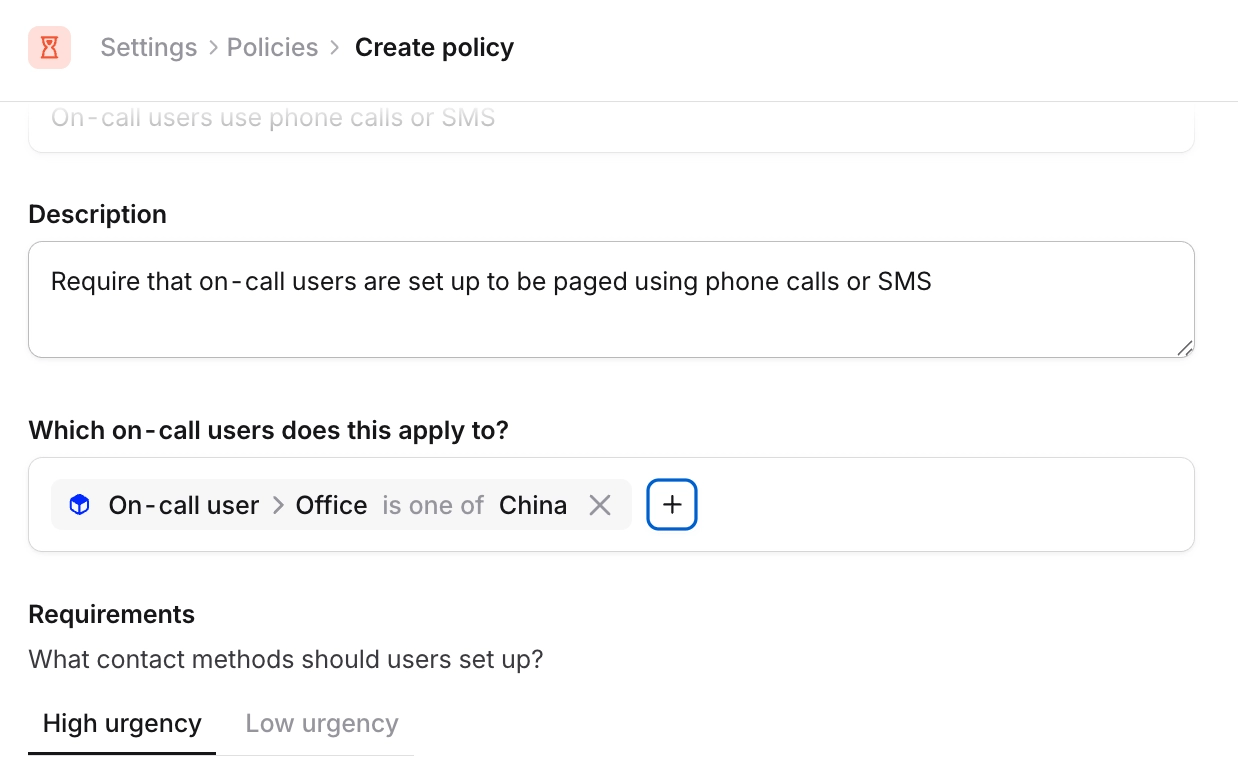
The available notification methods are different in Mainland China, so a single notification policy that covers everyone will misfit one group of responders. We recommend creating a separate notification policy for Mainland China — and in particular, leaning on SMS and voice for high-urgency rules rather than push, since iOS can’t reliably wake responders through the app there. Scope the policy to your China responders using a catalog attribute — for example, filtering by Office: