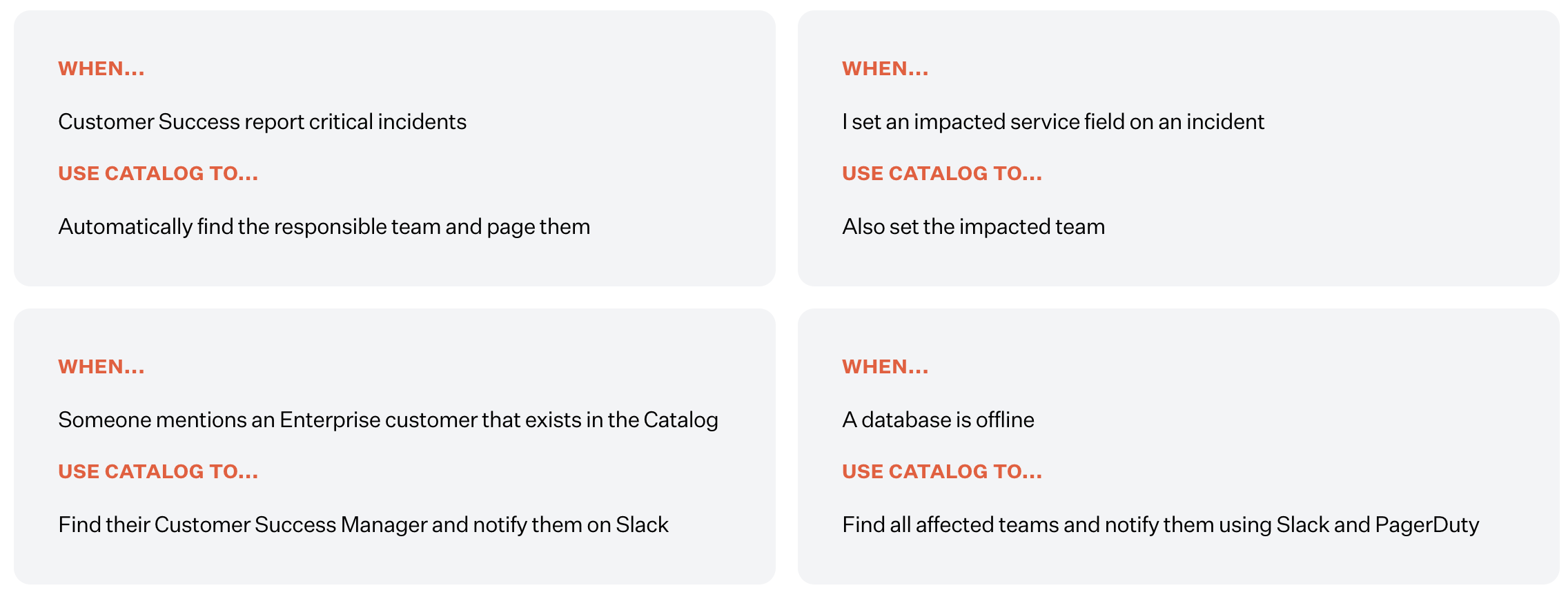
Common catalog types
When declaring the vast majority of incidents, you’ll likely want to be able to automatically bring in the teams/individuals responsible for resolving and communicating with stakeholders during an incident and so you’ll likely want to model three catalog types:Features
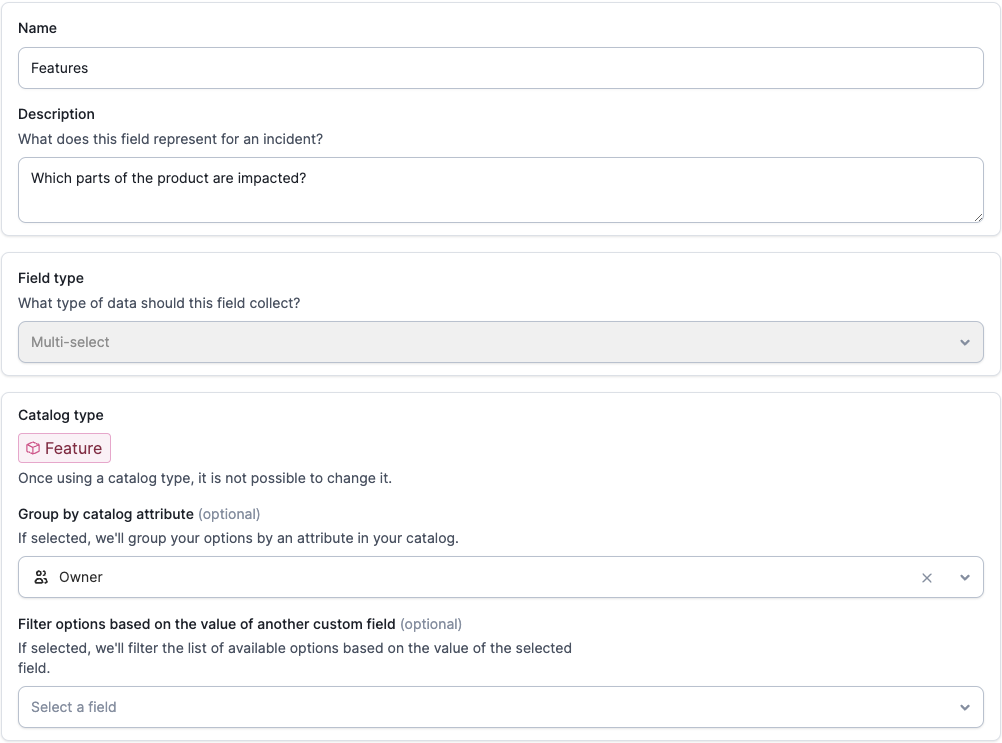
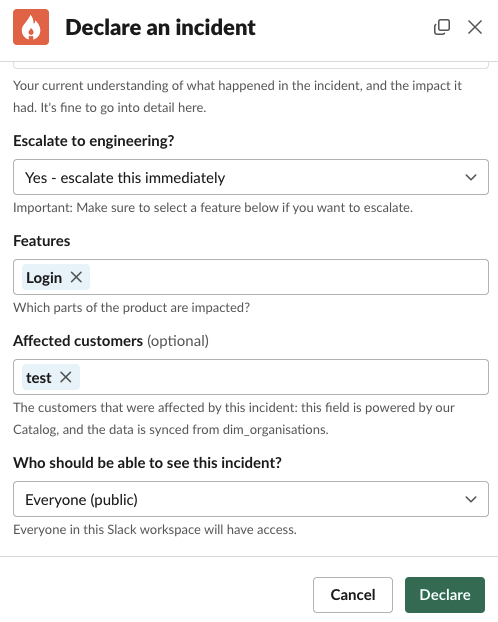
In large organizations, it’s unreasonable to expect someone declaring an incident to know who to specifically escalate something to. By adding a catalog type for features, you can therefore allow someone to just select the feature that’s impacted and escalate accordingly based on the team that owns that feature.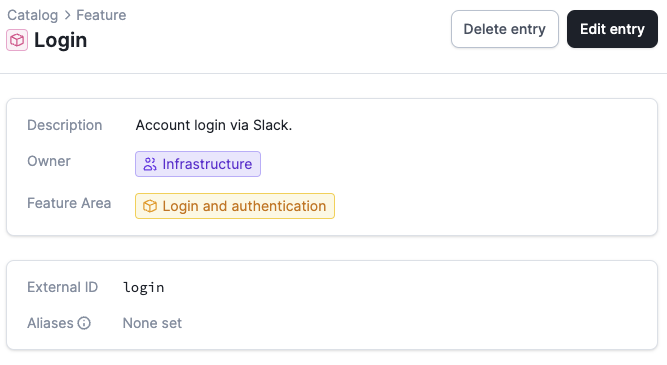
Teams
As part of the above, you’ll probably want to know a bit more about the team you’re escalating to e.g. What’s their escalation policy? Who’s the team lead? Who are the members? etc.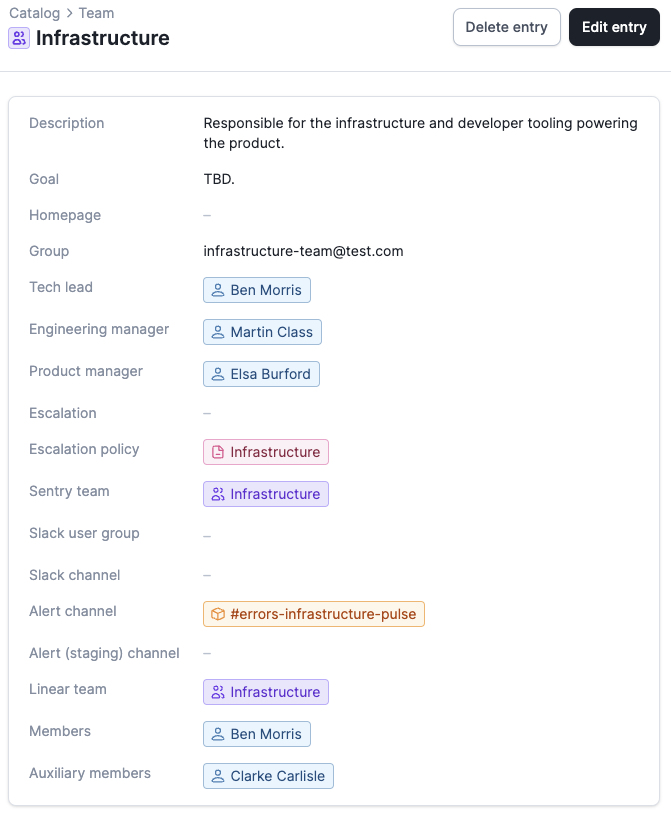
Customers
It’s often helpful to know more information about a customer when they’re affected by an incident in order to inform relevant internal stakeholders or set priorities e.g. who is their customer success manager? What pricing package or tier are they on?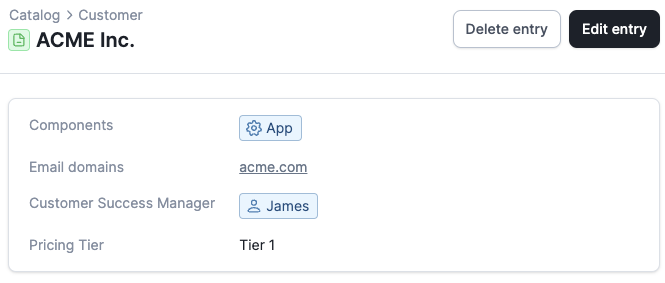
Organization-specific catalog types
It can often be difficult to know where to start when it comes to building a catalog that’s tailored to your business but it’s best to begin by identifying what your colleagues will know is broken when declaring an incident e.g. in a software business everyone understands the features / services we offer, whereas in a logistics company everyone will likely be referencing shipments or deliveries. Let’s jump into a more in-depth example by imagining I’m responsible for incident management for a rail network. Our most common incident is when hardware (a signal failure point) fails on the network, meaning we have to send engineers to fix the issue and keep customers & drivers informed. My ideal flow here would be to select the component that’s failing when declaring an incident, which should then automatically dispatch engineers to the component, assign a relevant comms lead and push a status page update. To do this, I’d need the following catalog types:Signal Failure Point
All of the points that can fail on a network will be represented in this type, storing a lookup to the rail line it’s on, the start and end stations and the type of component.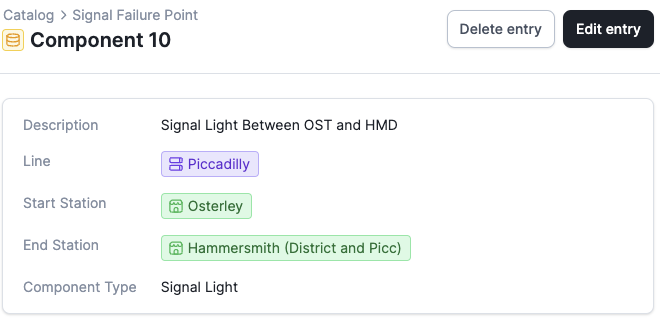
Line
Every tube line can be modeled in this type, with lookups to the status page for that line, the teams associated with the lines and the stations on that line.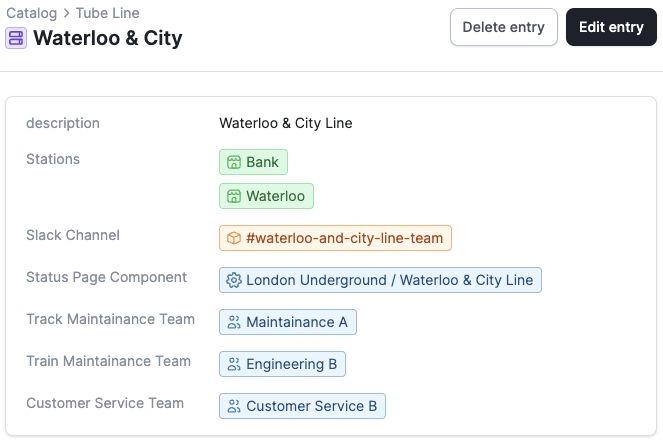
Station
Having a station catalog type is needed to maintain a list of station options and also have the same station associated with multiple lines (we could also use this in reports e.g. show me all incidents that have involved station x).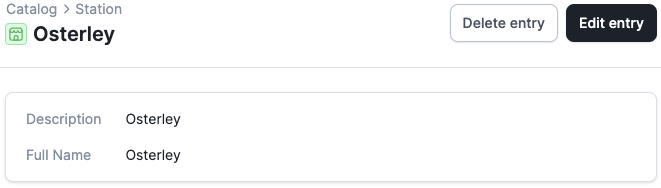
Team
Our team catalog type here holds all of the information I want to know about my teams i.e. who’s the lead, what’s their slack channel etc.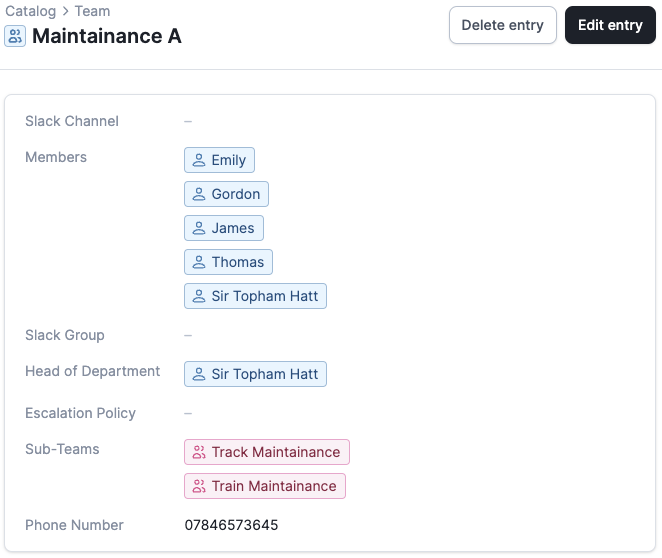
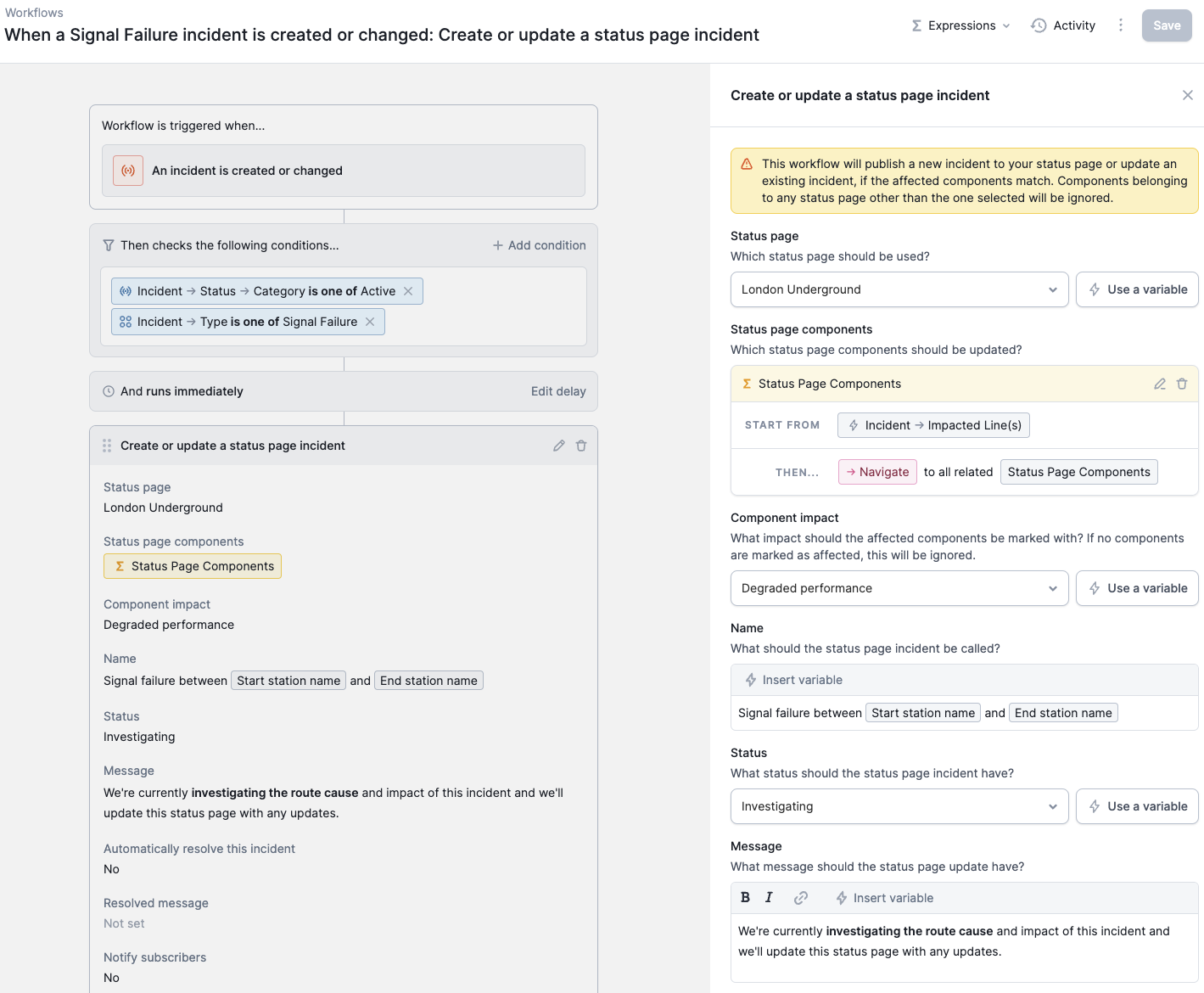
Using this principle, we could then consider building out a more comprehensive workflow to automatically publish an update to our status page letting customers know we’re having issues with line x between station y and z.