Follow-ups are a way for your team to capture something that needs to be done after an incident is closed. These will come in all shapes and sizes, from an urgent task such as reverting a temporary workaround, to a low priority task such as investigating how to move to a new cloud provider. You are able to assign each follow-up a priority, to capture this level of importance within incident.io. In this article, we will show you how to configure and assign priorities to your follow-ups, as well as how they work with policies, workflows, and reporting.

Assigning a Priority

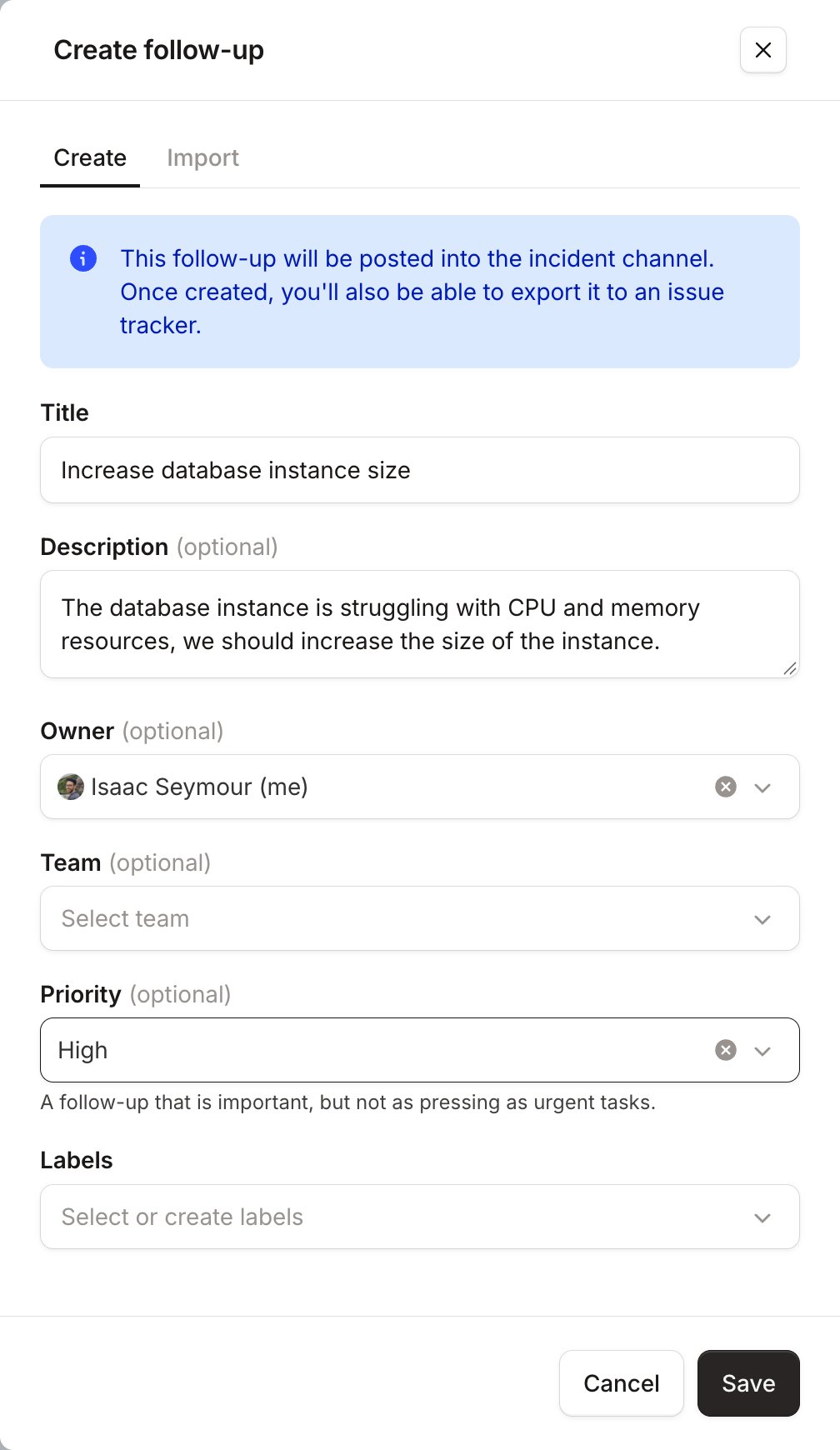
Set the priority via the dropdown in either the web or Slack experience. Create follow-up drawer in the web dashboard with Priority set to High
Configuring Follow-up Priorities

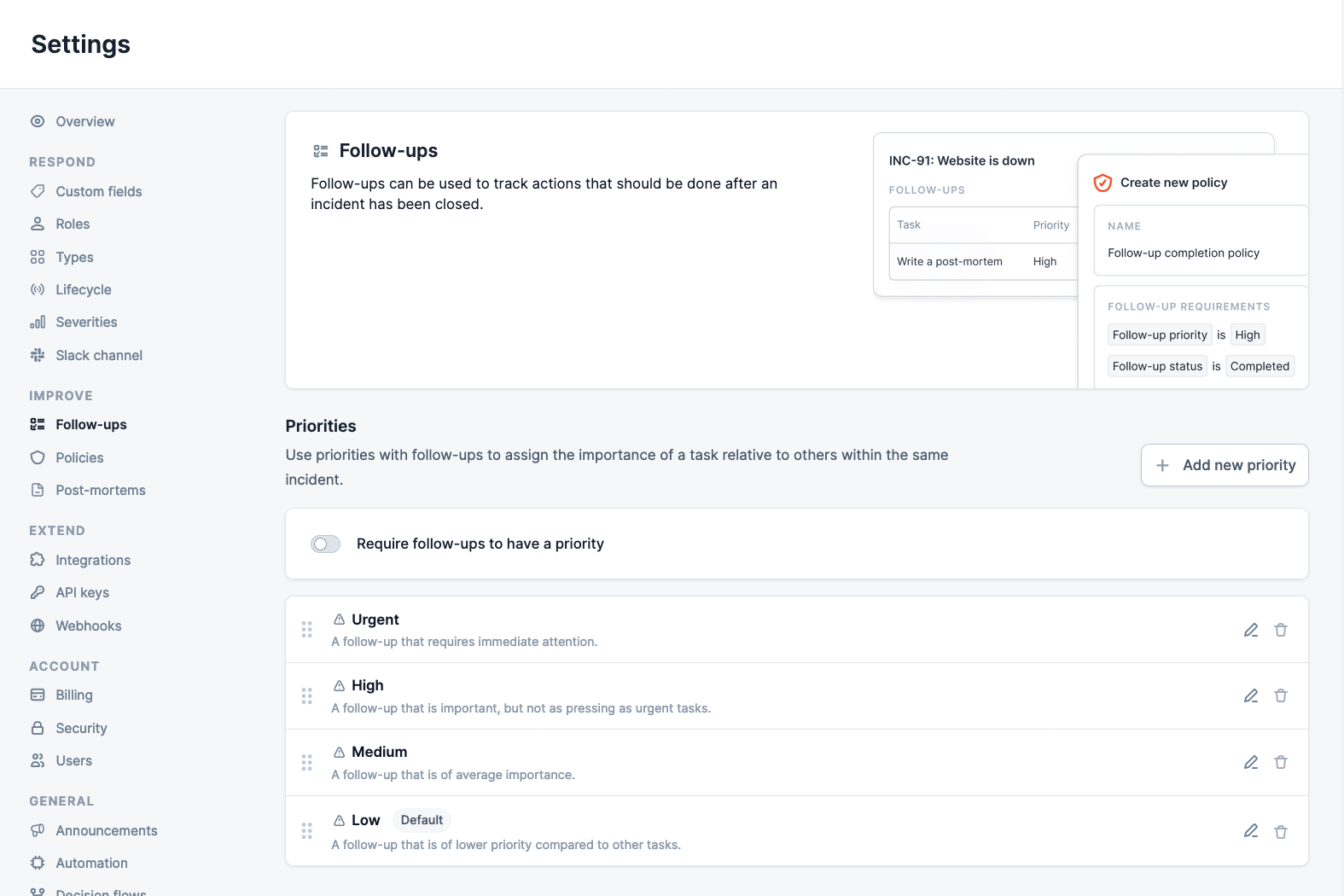
Navigate to the Settings → Follow-ups page to configure:
  • If follow-ups are required to have a priority
  • The amount of options available to choose from
  • The name and description of each priority option
  • The default priority option
If you export follow-ups to Jira Cloud, Jira Server, Linear, ClickUp, Freshservice or Notion, priority changes made in the issue tracker will sync back to incident.io, as long as priority names match. This is configurable from Settings → Follow-ups. With priority sync enabled, the tracker owns the priority of an exported follow-up and you can no longer set it in incident.io. See issue tracker sync for which other fields sync, and in which direction. Settings page for Follow-ups, listing the Urgent, High, Medium and Low priorities

Using Priorities with Policies

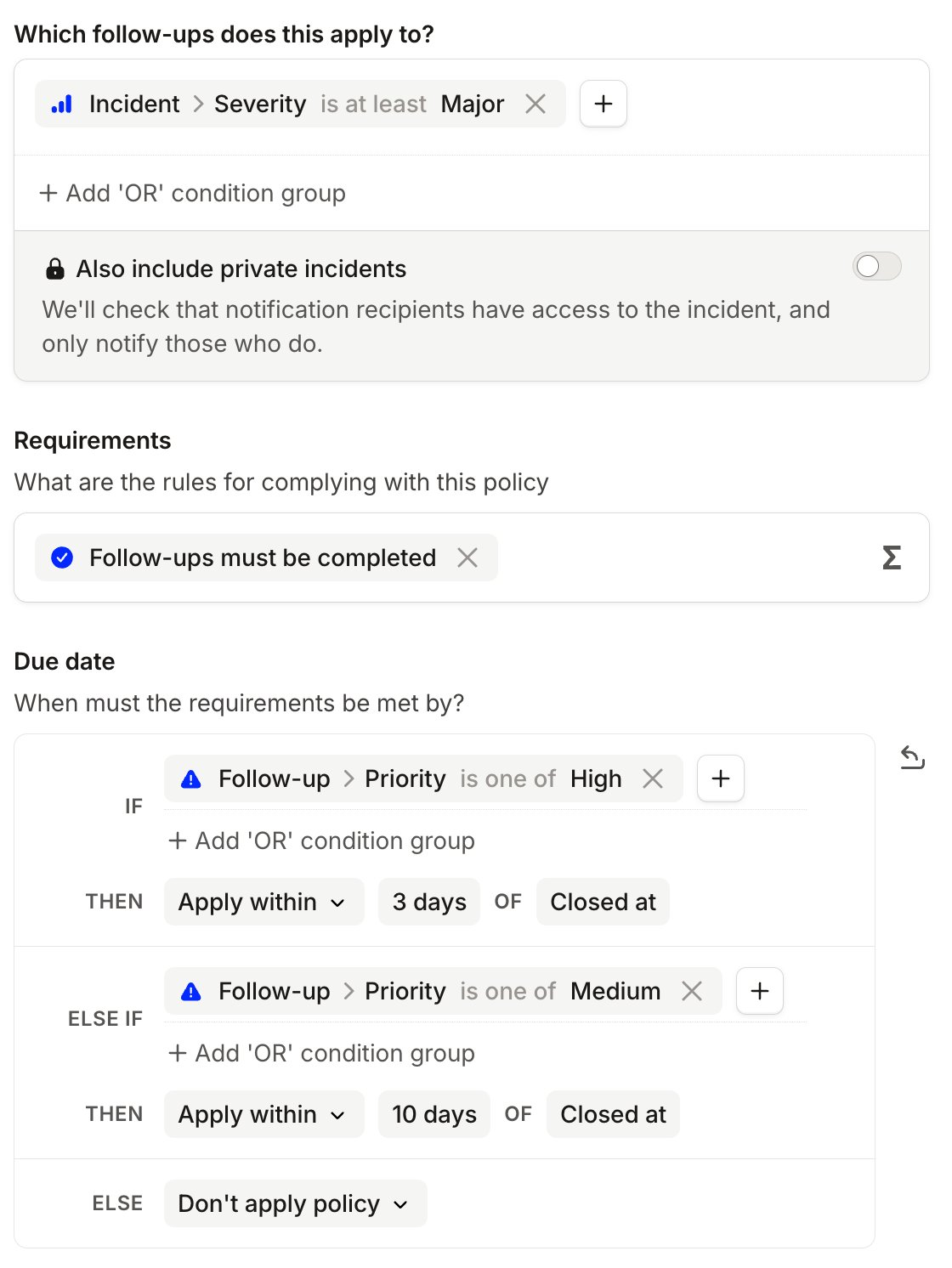
Navigate to the Settings → Policies page, and select Add a policy and then choose Follow-ups as the Policy type. Within the Requirements section, you are able to use Follow-up Priority alongside Expressions to determine the SLA that you want to set, allowing you to build a policy that says:
  • “All high priority follow-ups must be completed within 3 days, medium priority follow-ups within 10 days”.
    • Note that in this example, Low priority follow-ups will have no SLA, so won’t trigger a violation.
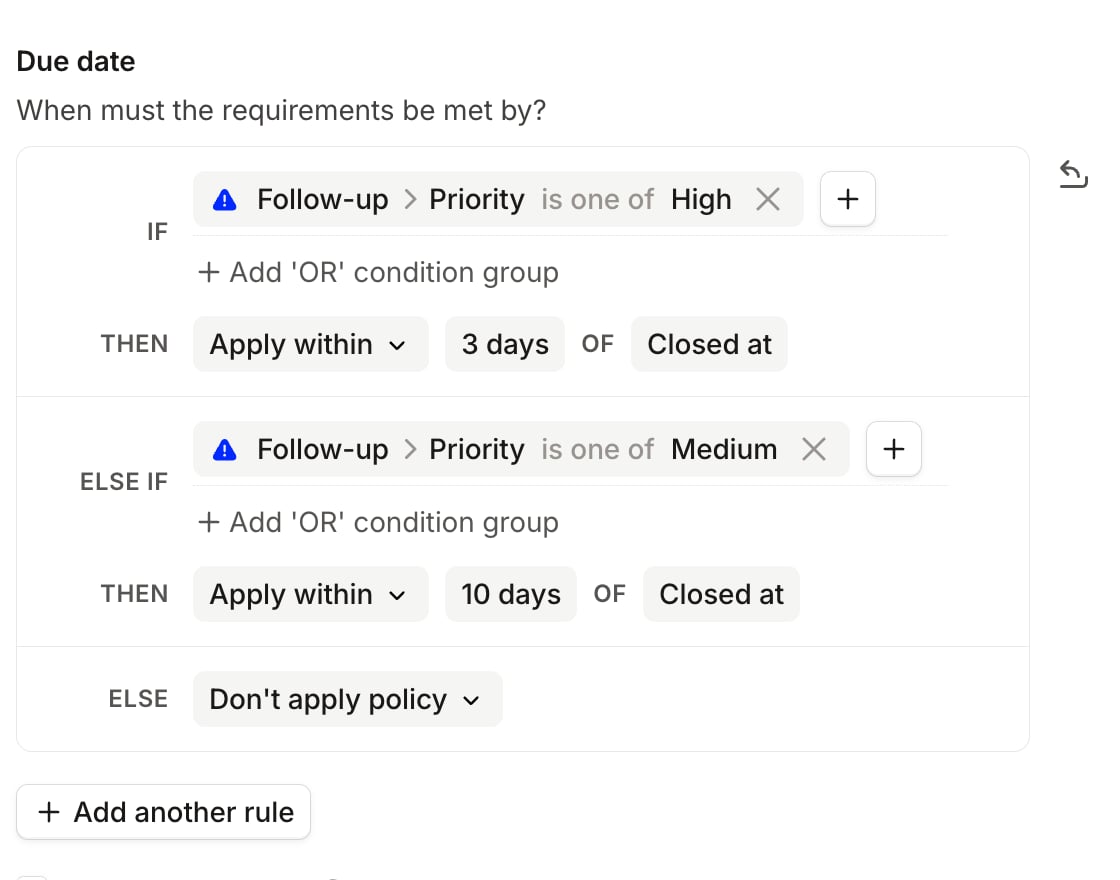
Due date rules applying within 3 days for High priority follow-ups and 10 days for Medium Follow-up policy form with an Incident Severity condition, completion requirement and due date rules

Using Priorities with Workflows

Navigate to the Workflows configuration page, and select New Workflow and your workflow trigger (e.g. ” When a follow-up is created or changed” ). Click Add condition and choose Follow-up Priority to require that this workflow is conditional on the priority of a follow-up, thus allowing for workflows such as:
  • “When a follow-up is created or changed, and the priority is set to urgent, then email the tech lead.”

Using Priorities with Reporting

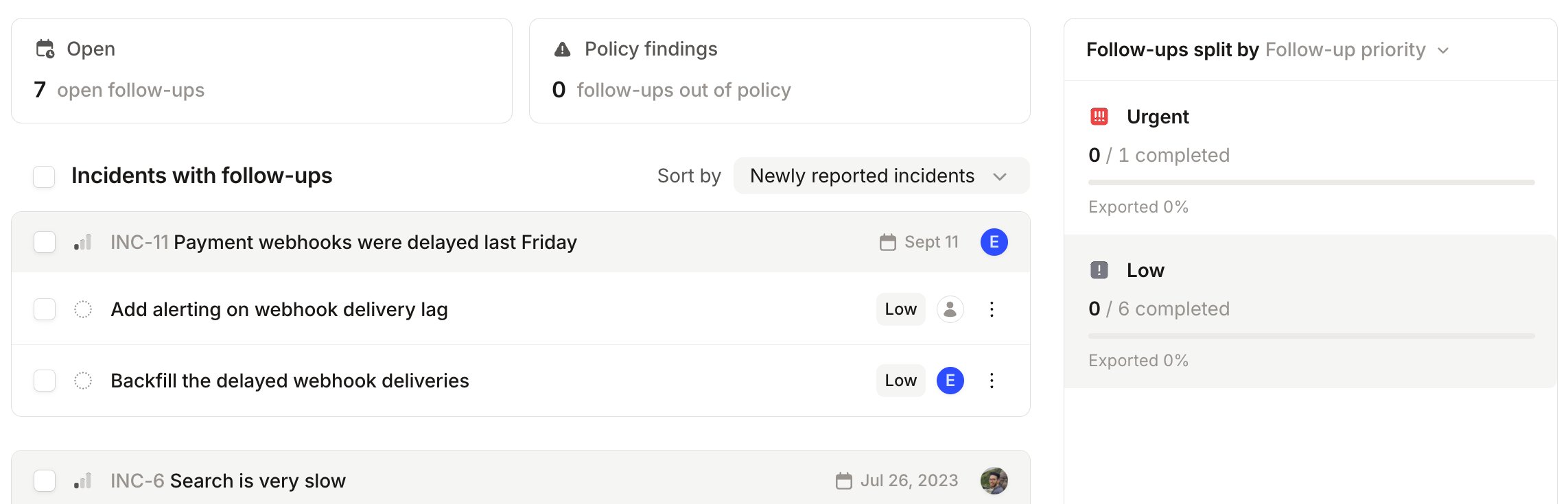
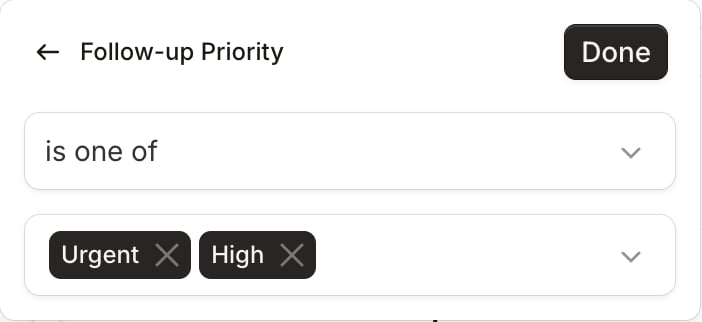
Navigate to the Follow-ups reporting page. The panel on the right of the screen is headed Follow-ups split by followed by the attribute it is using: click that attribute name and choose Follow-up priority to see the breakdown. Follow-ups reporting page with the right panel split by Follow-up priority You can also make use of the Follow-up Priority filter on this page. Click Filters and views in the top-left of the screen, pick Follow-up Priority from the list of attributes, choose the priorities you want, and hit Done. Follow-up Priority filter set to is one of Urgent and High