> ## Documentation Index
> Fetch the complete documentation index at: https://docs.incident.io/llms.txt
> Use this file to discover all available pages before exploring further.
# Salesforce Service Cloud
> Link Salesforce cases to incidents and keep support agents in the loop.
This integration is in early access. Reach out to your account team to get set up.
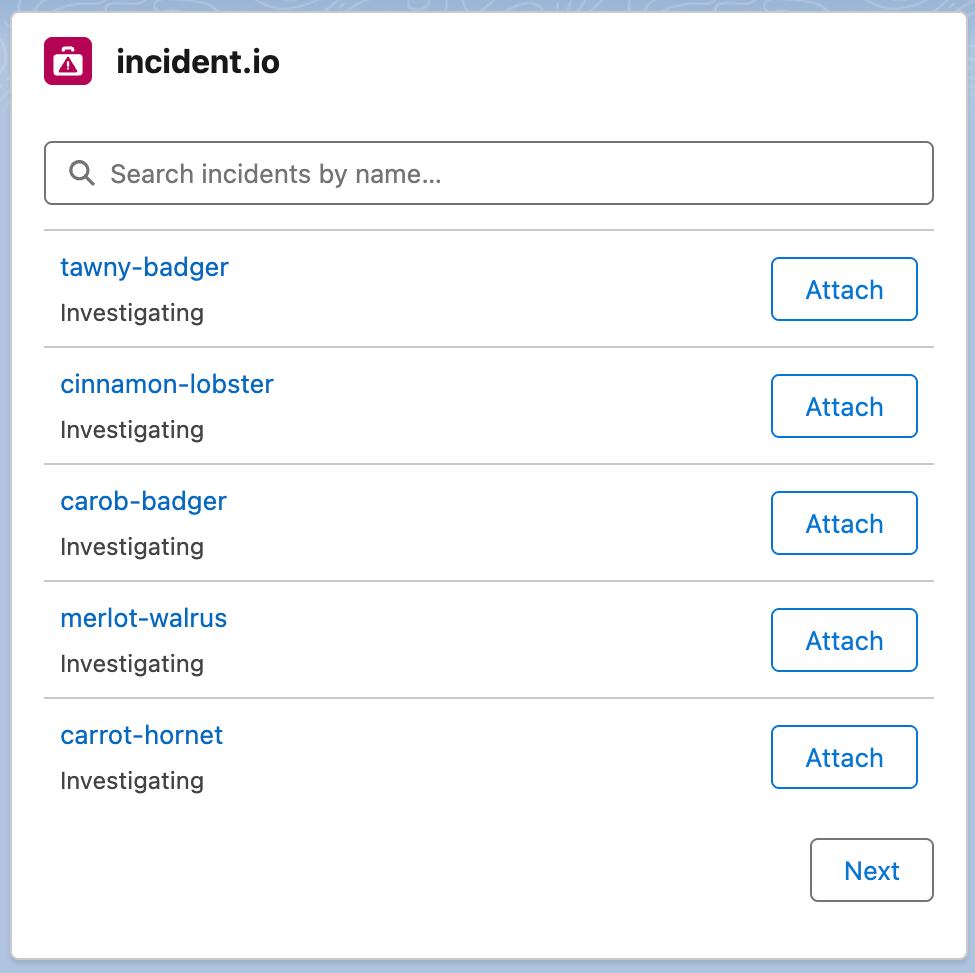
During an incident, your support team needs to know what's going on. With the Salesforce Service Cloud integration, support agents can see active incidents, link cases to ongoing incidents, and get real-time updates — all without leaving Salesforce.
Engineers get visibility into customer impact through linked cases, and support agents stay informed as incidents progress. It bridges the gap between your engineering and support teams so both sides have the context they need.
 ***
## Setting up
Setup involves connecting incident.io to Salesforce Service Cloud, installing our Salesforce app, and configuring who can see the incident.io panel.
If you already have the [Salesforce integration](/integrations/salesforce) connected for catalog sync, you'll need to re-authorize it to grant incident.io access to cases.
Head to **Settings → Integrations → [Salesforce](https://app.incident.io/~/settings/integrations/salesforce)** and re-authorize the connection. If you're setting up Salesforce for the first time, the initial authorization will include the required scopes.
A Salesforce Admin needs to install the incident.io app into your Salesforce org. This adds the components that power the incident.io panel on case pages.
We're currently finalizing our Salesforce AppExchange listing. In the meantime, reach out to your account team and we'll get the app installed for you.
Once the app is installed, head back to your Salesforce integration settings in incident.io and click **Enable sidebar app**.
This securely pushes a credential to Salesforce that allows the app to fetch incident data and attach cases to incidents. Without this step, the app won't be able to communicate with incident.io.
The app includes a permission set called **incident.io** that controls who can **use** the panel — without it, the panel will be visible but non-functional.
A Salesforce Admin needs to assign this permission set to any users who should interact with incidents from Salesforce:
1. In Salesforce, navigate to **Setup → Permission Sets**
2. Find the **incident.io** permission set
3. Click **Manage Assignments** and add the relevant users
The incident.io panel doesn't appear on case pages automatically — a Salesforce Admin needs to add it using the Lightning App Builder.
1. In Salesforce, navigate to **Setup → Object Manager → Case → Lightning Record Pages**
2. Open the case record page in the **Lightning App Builder**
3. Drag the **incident.io** component onto the page layout
4. Optionally, use component visibility filters to restrict which users or profiles can see the panel (e.g. the same users granted the permission set)
5. Save and activate the updated page
Once setup is complete, users with the **incident.io** permission set will be able to use the incident.io panel when viewing cases.
***
## Attaching cases
With the integration set up, support agents can link Salesforce cases to active incidents directly from the case view.
When viewing a case, the incident.io panel shows a list of active incidents. Agents can search for relevant incidents and attach the case to one — making it clear that the customer issue is related to a known problem.
You can also attach cases to incidents from within incident.io, on the incident's detail page.
***
## Incident updates on cases
Once a case is linked to an incident, incident.io automatically posts updates to the case as the incident progresses. Changes like status updates, severity changes, and updates from the incident lead appear as posts on the case's Chatter feed.
This keeps support agents informed without them needing to check incident.io or chase engineers for updates — they can see progress directly on the case they're working on.
***
## Updating the incident channel
When a case is attached to an incident, a notification is posted to the incident channel. This gives responders visibility into customer impact and helps them understand the scale of the issue.
***
## Incident tickets
Set up [incident tickets](/integrations/incident-tickets) to create a Salesforce Case for each incident and keep it current. This is separate from attaching cases that already exist: the incident gets a Case of its own.
***
## FAQs
The original Salesforce integration only needs permission to read accounts and related objects for catalog sync. The
Service Cloud integration also needs access to cases, so re-authorization grants these additional scopes.
The permission set controls who can **use** the panel, not who can see it. Users without the permission set will see
the panel but won't be able to interact with it. To also control visibility, Salesforce Admins can set component
visibility filters in the Lightning App Builder to restrict the panel to specific users or profiles.
Two things need to happen after installation: a Salesforce Admin must assign the **incident.io** permission set to
users, and they must add the incident.io component to the case page layout using the Lightning App Builder. The
panel won't appear until both are done.
This integration is designed for organizations using Salesforce Service Cloud, which provides the case management
functionality. If you use Salesforce but not Service Cloud, the existing [catalog
integration](/integrations/salesforce) is still available for syncing accounts and other objects.
Detaching a case stops future incident updates from being posted to that case. Any updates that were posted while
the case was attached remain on the case's Chatter feed.
***
## Setting up
Setup involves connecting incident.io to Salesforce Service Cloud, installing our Salesforce app, and configuring who can see the incident.io panel.
If you already have the [Salesforce integration](/integrations/salesforce) connected for catalog sync, you'll need to re-authorize it to grant incident.io access to cases.
Head to **Settings → Integrations → [Salesforce](https://app.incident.io/~/settings/integrations/salesforce)** and re-authorize the connection. If you're setting up Salesforce for the first time, the initial authorization will include the required scopes.
A Salesforce Admin needs to install the incident.io app into your Salesforce org. This adds the components that power the incident.io panel on case pages.
We're currently finalizing our Salesforce AppExchange listing. In the meantime, reach out to your account team and we'll get the app installed for you.
Once the app is installed, head back to your Salesforce integration settings in incident.io and click **Enable sidebar app**.
This securely pushes a credential to Salesforce that allows the app to fetch incident data and attach cases to incidents. Without this step, the app won't be able to communicate with incident.io.
The app includes a permission set called **incident.io** that controls who can **use** the panel — without it, the panel will be visible but non-functional.
A Salesforce Admin needs to assign this permission set to any users who should interact with incidents from Salesforce:
1. In Salesforce, navigate to **Setup → Permission Sets**
2. Find the **incident.io** permission set
3. Click **Manage Assignments** and add the relevant users
The incident.io panel doesn't appear on case pages automatically — a Salesforce Admin needs to add it using the Lightning App Builder.
1. In Salesforce, navigate to **Setup → Object Manager → Case → Lightning Record Pages**
2. Open the case record page in the **Lightning App Builder**
3. Drag the **incident.io** component onto the page layout
4. Optionally, use component visibility filters to restrict which users or profiles can see the panel (e.g. the same users granted the permission set)
5. Save and activate the updated page
Once setup is complete, users with the **incident.io** permission set will be able to use the incident.io panel when viewing cases.
***
## Attaching cases
With the integration set up, support agents can link Salesforce cases to active incidents directly from the case view.
When viewing a case, the incident.io panel shows a list of active incidents. Agents can search for relevant incidents and attach the case to one — making it clear that the customer issue is related to a known problem.
You can also attach cases to incidents from within incident.io, on the incident's detail page.
***
## Incident updates on cases
Once a case is linked to an incident, incident.io automatically posts updates to the case as the incident progresses. Changes like status updates, severity changes, and updates from the incident lead appear as posts on the case's Chatter feed.
This keeps support agents informed without them needing to check incident.io or chase engineers for updates — they can see progress directly on the case they're working on.
***
## Updating the incident channel
When a case is attached to an incident, a notification is posted to the incident channel. This gives responders visibility into customer impact and helps them understand the scale of the issue.
***
## Incident tickets
Set up [incident tickets](/integrations/incident-tickets) to create a Salesforce Case for each incident and keep it current. This is separate from attaching cases that already exist: the incident gets a Case of its own.
***
## FAQs
The original Salesforce integration only needs permission to read accounts and related objects for catalog sync. The
Service Cloud integration also needs access to cases, so re-authorization grants these additional scopes.
The permission set controls who can **use** the panel, not who can see it. Users without the permission set will see
the panel but won't be able to interact with it. To also control visibility, Salesforce Admins can set component
visibility filters in the Lightning App Builder to restrict the panel to specific users or profiles.
Two things need to happen after installation: a Salesforce Admin must assign the **incident.io** permission set to
users, and they must add the incident.io component to the case page layout using the Lightning App Builder. The
panel won't appear until both are done.
This integration is designed for organizations using Salesforce Service Cloud, which provides the case management
functionality. If you use Salesforce but not Service Cloud, the existing [catalog
integration](/integrations/salesforce) is still available for syncing accounts and other objects.
Detaching a case stops future incident updates from being posted to that case. Any updates that were posted while
the case was attached remain on the case's Chatter feed.